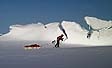
IceTrek member Eric
Philips made a test run
across sea ice outside
Scott Base, Ross Island.
|
1. What elevation is considered "high" altitude?
C . 8,000 feet and above
|
|
2. In Polar regions, inadequate oxygen in the bloodstream occurs at lower elevations.
A. True
|
|
3. The Process by which your body adjusts and adapts to the decrease in oxygen available to the tissues is called:
C. Acclimatization
|
|
4. The body acclimatizes to altitude by altering which processes?
E. All of the above
|
|
5. Everyone acclimatizes at the same rate.
B. False
|
|
6. Normal body responses to altitude include all of the following except:
B. Vomiting
|
|
7. Mild symptoms of AMS include a headache with which of the following:
D. Lack of appetite
|
|
8. High Altitude Cerebral Edema is a serious illness that must be treated immediately.
A. True
|
|
9. Signs/Symptoms of High Altitude Pulmonary Edema include:
D. All of the above
|
|
10. Initial treatment for all altitude illnesses include:
E. All of the above
|
|
11. Prior to departing for altitude you should:
B. Rest, hydrate and avoid alcohol, tobacco and depressant medications
|
|
12. The altitude medication Diamox is available at McMurdo Medical clinic:
A. True
|
|
13. After arriving at altitude you should:
C. Rest, hydrate, light exercise and avoid tobacco, alcohol and depressant medications
|
|
Return to Altitude in Antarctica Training
Return to Course Material