|
Water from melting glaciers have much higher levels of nutrients than previously thought 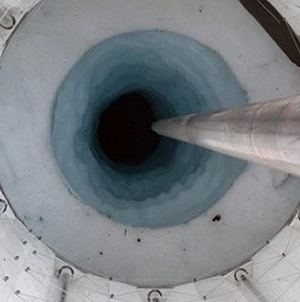
National Science Foundation Posted December 6, 2020 Researchers have found that water from melting glaciers in Greenland and Antarctica contains many high levels of trace element nutrients than is contained in typical rivers. This study found that the nutrient-rich meltwaters from ice sheets and glacial waters might have a much more significant effect on ocean productivity and ecosystems. “Iron concentrations are normally really low in the surface ocean waters surrounding these ice sheets, especially in the Southern Ocean, adjacent to Antarctica,” said Mark Skidmore, professor in MSU’s Department of Earth Sciences in the College of Letters and Science. “The iron from subglacial waters may act as a fertilizer for these ocean surface waters, impacting rates of primary productivity, and thus the carbon cycle.” The MSU research team contributed to these findings through the NSF funded project, Subglacial Antarctic Lakes Scientific Access, or SALSA. The Antarctic samples were taken from Mercer Subglacial Lake in West Antarctica as part of a drilling project led by Professor John Priscu, the project’s chief scientist, of MSU’s Department of Land Resources and Environmental Sciences in the College of Agriculture. Read more at https://bit.ly/2VKlx2X Photo: The SALSA hot water drill and the borehole that extends 3,500 feet downwards into the Antarctic Subglacial Environment. Credit, Billy Collins, SALSA Education & Outreach
|
Water from melting glaciers have much higher levels of nutrients than previously thought


For USAP Participants |
For The Public |
For Researchers and EducatorsContact UsU.S. National Science FoundationOffice of Polar Programs Geosciences Directorate Randolph Building 401 Dulany Street Alexandria, VA 22314 Sign up for the NSF Office of Polar Programs newsletter and events. Feedback Form |