|
PRI Shows How Seals Assist Scientists with Predictions of the Thwaites Glacier Collapse 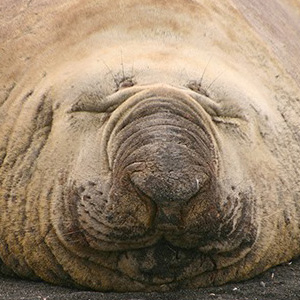
National Science Foundation Posted July 15, 2019 "Weddell seals dive almost 2,000 feet below the ocean’s surface. Elephant seals (such as the one in this 2005 photo) go even deeper – more than 3,000 feet. That means if scientists equip them with sensors, the seals are ideal for measuring the ocean’s temperature at different depths. And perfect for tracking the layer of slightly warmer water found deep below the ocean’s surface that’s melting West Antarctica’s glaciers," according to Public Radio International reporter Carolyn Beeler. Beeler’s story about how seals are helping polar scientists can be heard or read here: https://www.pri.org/stories/2019-06-03/these-high-tech-seals-are-charting-future-sea-level-rise An animation showing what the instruments the seals are carrying measure as the animals leave the surface and dive to 1,000 meters, or 3,280 feet, is here: https://interactive.pri.org/2019/05/antarctica/seal-climate-change.html Beeler was selected jointly by NSF and NERC: Natural Environment Research Council as one of two journalists to sail aboard OPP's research vessel Nathaniel B. Palmer earlier this year to cover the first deployment of scientists with the OPP-funded International Thwaites Glacier Collaboration.
|



For USAP Participants |
For The Public |
For Researchers and EducatorsContact UsU.S. National Science FoundationOffice of Polar Programs Geosciences Directorate Randolph Building 401 Dulany Street Alexandria, VA 22314 Sign up for the NSF Office of Polar Programs newsletter and events. Feedback Form |