2026-2027 USAP Field Season
Project Detail Project TitleLocal-scale Drivers and Responses of Thermospheric Weather Above Antarctica Summary
Event Number:
Program Director:
ASC POC/Implementer: Principal Investigator(s)
Dr. Mark Gerard Conde
Project Web Site: Location
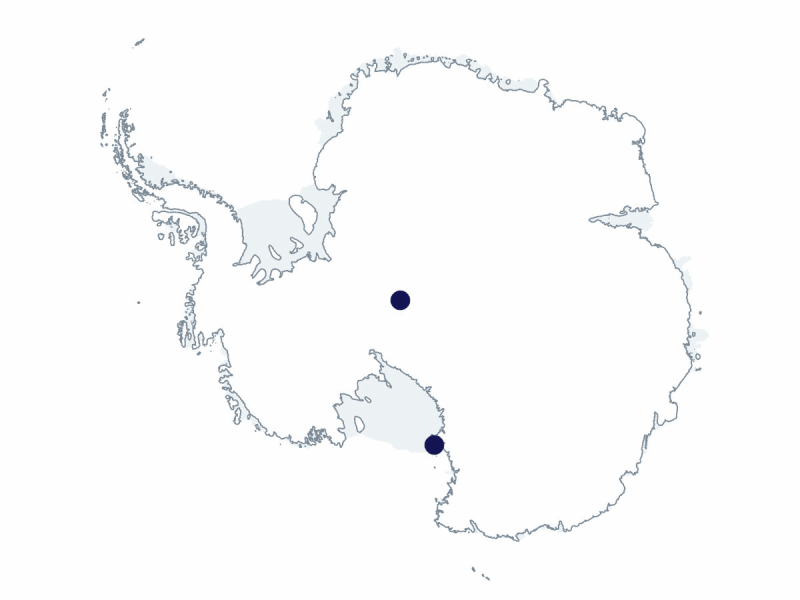
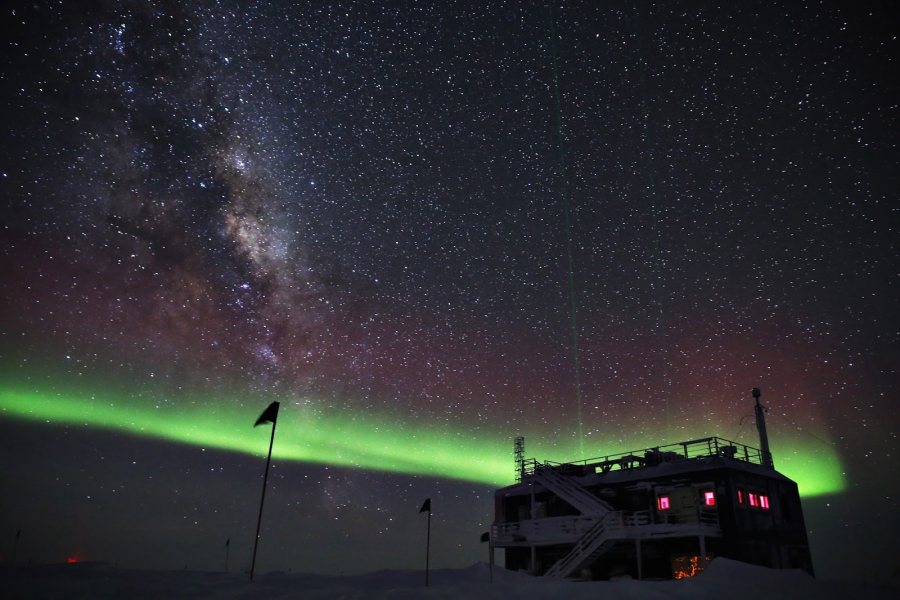
Supporting Stations: McMurdo Station, South Pole Station DescriptionThis project will use existing ground-based Fabry-Pérot spectrometers at McMurdo Station and South Pole Station to measure mesospheric and thermospheric neutral winds and temperatures, at heights of approximately 87, 120, and 240 kilometers. The project investigates coupling mechanisms that drive the morphology of small-scale thermospheric perturbations and large-scale thermospheric weather. The study will address both large-scale changes in mean flow and small-scale local perturbations and independently resolve impacts due to forcing from above versus below. Existing instruments will be upgraded by adding a capability to measure winds and temperatures at mesopause heights. The study will be supported by collaborative data from existing mesospheric temperature mapper and Super Dual Auroral Radar Network (SuperDARN) radar instruments in Antarctica, in turn providing neutral wind and temperature data for use by collaborators. Field Season OverviewOne participant will deploy to McMurdo Station and South Pole Station to perform routine calibration and alignment procedures, back up the computer systems, hand-carry full-resolution data files that are too large for reliable transmission over the United States Antarctic Program network, repair any faults that may occur during the 2026-27 observing season, and restock spare parts. At McMurdo, the aging filter wheel and view-switch mechanisms will be replaced with a new 3-D-printed fore-optics assembly. At South Pole, the team will install a modified optical coupling section to rectify a problem that prevents optimum focus on the sky. This will require disassembly and reassembly of the instrument fore-optics. In addition, instrumentation will continue to operate autonomously, year-round, via remote monitoring and control, aided by on-site support from Antarctic Support Contract staff and other station infrastructure (e.g., information technology network, station services) as needed. Research associate support will be provided throughout the year for routine monitoring and operation, logging observations, and responding to minor maintenance or diagnostic requests. Deploying Team Members
|
2026-2027 Science Planning Summary


For USAP Participants |
For The Public |
For Researchers and EducatorsContact UsU.S. National Science FoundationOffice of Polar Programs Geosciences Directorate Randolph Building 401 Dulany Street Alexandria, VA 22314 Sign up for the NSF Office of Polar Programs newsletter and events. Feedback Form |