2026-2027 USAP Field Season
Project Detail Project TitleCollaborative Research: Research Infrastructure: CCRI: New: Distributed Space and Terrestrial Networking Infrastructure for Multiconstellation Coexistence Summary
Event Number:
NSF Contact:
ASC POC/Implementer: Principal Investigator(s)
Dr. Samantha Parry Kenyon
Project Web Site: Location
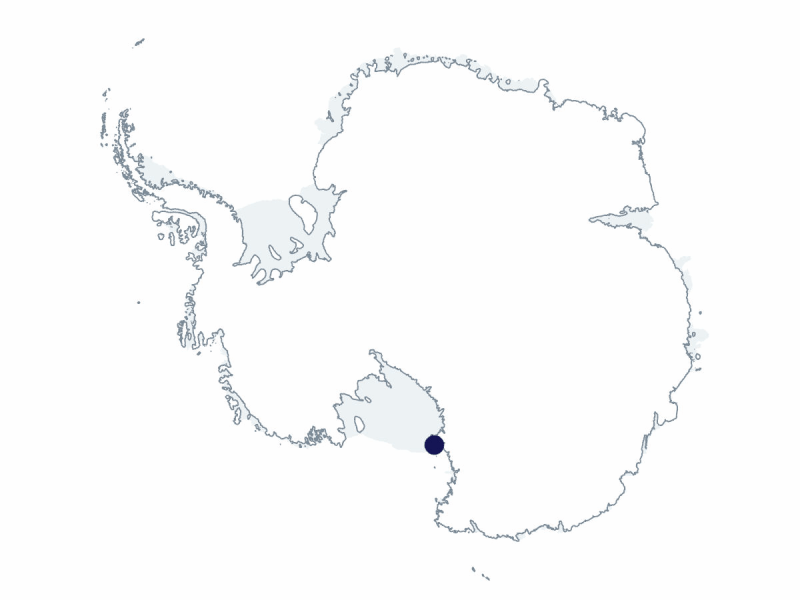
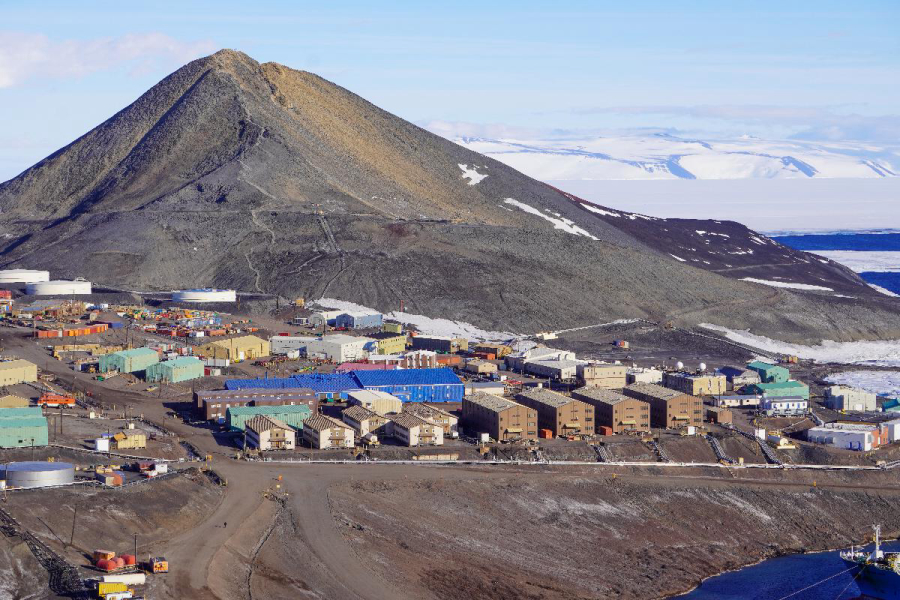
Supporting Stations: McMurdo Station DescriptionInternet infrastructure is currently undergoing a transformation driven by projects to provide global wireless internet to every individual and internet-connected device on Earth, leveraging megaconstellations of small satellites deployed in low Earth orbit (LEO). Companies such as Starlink, OneWeb, and Amazon Kuiper are at the forefront of this work, seeking to deliver low-latency, high-bandwidth broadband services worldwide. These developments have created a need to conduct real-world experiments on deployed LEO networks to confirm performance parameters and potential bottlenecks, develop innovative LEO-specific solutions, and enhance the sophistication, data-driven nature of simulators and emulators used in the research community. Virginia Tech and the University of Surrey are collaborating with global research institutions and industries to build LEOScope, a global LEO satellite network testbed to serve as the go-to platform for conducting customized network and application experiments over LEO networks. The primary objective is to collect LEOScope data from a stand-alone Starlink terminal based at McMurdo Station in Antarctica. This network requires Starlink to employ intersatellite links to route data from Antarctica to the internet access point in Sydney, Australia, which is only a subset of the constellation supports. This study will yield invaluable insights into how Starlink and satellite links in general perform under harsh polar weather conditions. Field Season OverviewThe support for this program for the upcoming season will be minimal. Currently the Intel Next Unit of Computing (NUCs) that were sent to the McMurdo Station a few years ago are still connected to the Starlink Terminal and are operational. The team may need occasional smart-hands help if the NUCs are no longer remote accessible, but the terminals have operated over the past 2 years with minimal needs of on-site help. |
2026-2027 Science Planning Summary


For USAP Participants |
For The Public |
For Researchers and EducatorsContact UsU.S. National Science FoundationOffice of Polar Programs Geosciences Directorate Randolph Building 401 Dulany Street Alexandria, VA 22314 Sign up for the NSF Office of Polar Programs newsletter and events. Feedback Form |