2026-2027 USAP Field Season
Project Detail Project TitlePan-Antarctic Investigations of Mesospheric Wave Dynamics and Influences Using the ANGWIN Network Summary
Event Number:
Program Director:
ASC POC/Implementer: Principal Investigator(s)
Dr. Pierre-Dominique Pautet
Project Web Site: Location
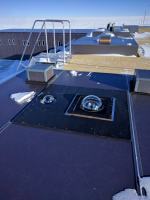
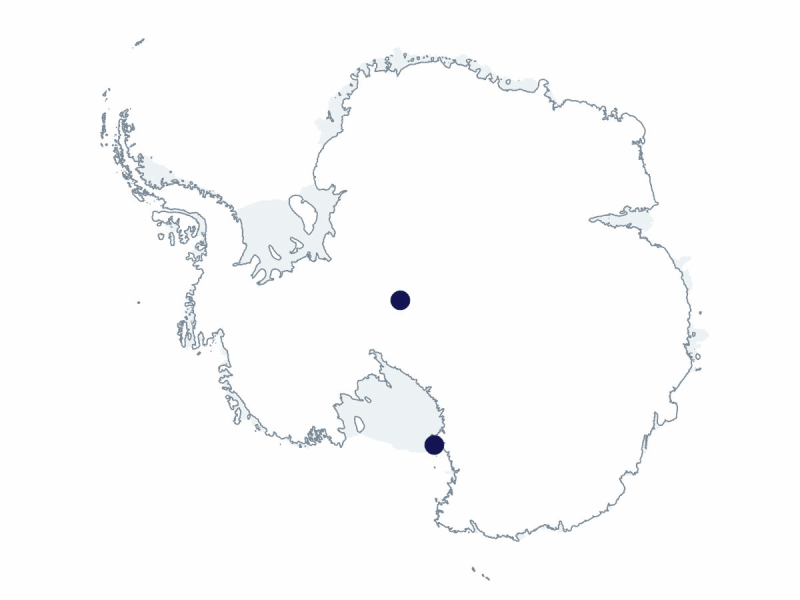
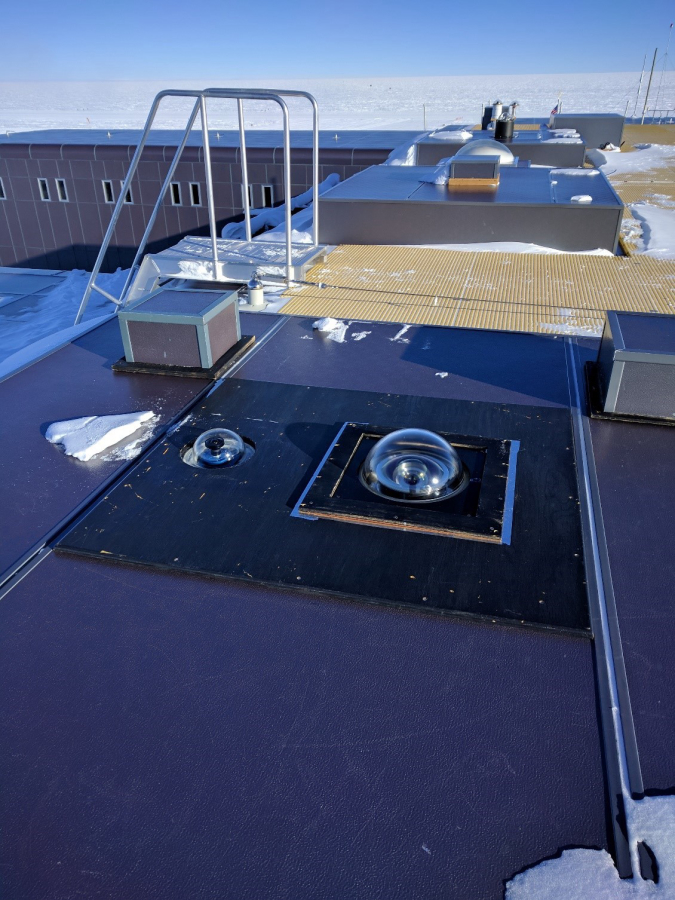
Supporting Stations: McMurdo Station, South Pole Station DescriptionThis project broadly aims to quantify the properties, variability, momentum fluxes, and dominant sources of mesospheric gravity waves (GWs) and their continental-scale effects on the upper atmosphere over Antarctica. GWs of various scales and large amplitudes are now understood to provide most of the mean and variable forcing in the mesosphere, making their measurement critical to understanding many weather-related processes. The project is part of the Antarctic Gravity Wave Instrument Network (ANGWIN), an international collaboration of scientists and students with interests in Antarctic research. ANGWIN measurements over several austral winters have revealed a wealth of mesospheric wave activity, ranging from GWs with horizontal scales of tens of kilometers to planetary waves (PWs). The overall impact of GWs and PWs on the mesospheric dynamics over the vast Antarctic continent remains unknown. This project extends measurement capabilities with the installation and operation of a Rayleigh lidar at South Pole Station (provided by Deutsches Zentrum für Luft- und Raumfahrt, Germany), greatly enhancing capabilities for high-quality, in-depth mesospheric wave studies. Field Season OverviewNo on-site fieldwork will be performed in 2026-27. Instruments operated as expected during winter 2025 and restarted normal image data collection in April 2026. End-of-winter observations are expected in September 2026. Research associate support will be provided throughout the year for routine monitoring and maintenance of equipment, including observation of the cameras and lidar to ensure they are in normal operating mode; shutdown and restart of software and hardware; data transfer; and communication with the project's principal investigator and other personnel as needed. |
2026-2027 Science Planning Summary


For USAP Participants |
For The Public |
For Researchers and EducatorsContact UsU.S. National Science FoundationOffice of Polar Programs Geosciences Directorate Randolph Building 401 Dulany Street Alexandria, VA 22314 Sign up for the NSF Office of Polar Programs newsletter and events. Feedback Form |