2026-2027 USAP Field Season
Project Detail Project TitleAntarctica as a Model System for Responses of Terrestrial Carbon Balance to Warming Summary
Event Number:
Program Director:
ASC POC/Implementer: Principal Investigator(s)
Dr. Natasja Carla van Gestel
Project Web Site: Location
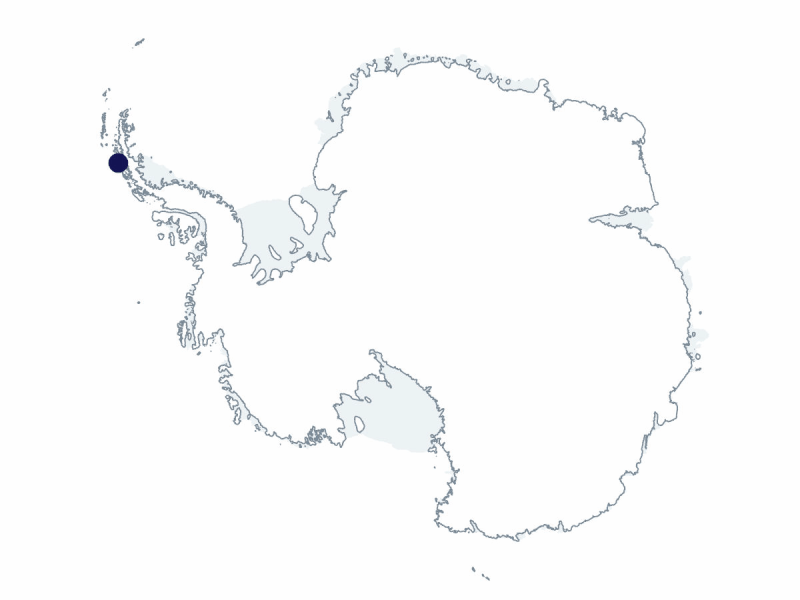
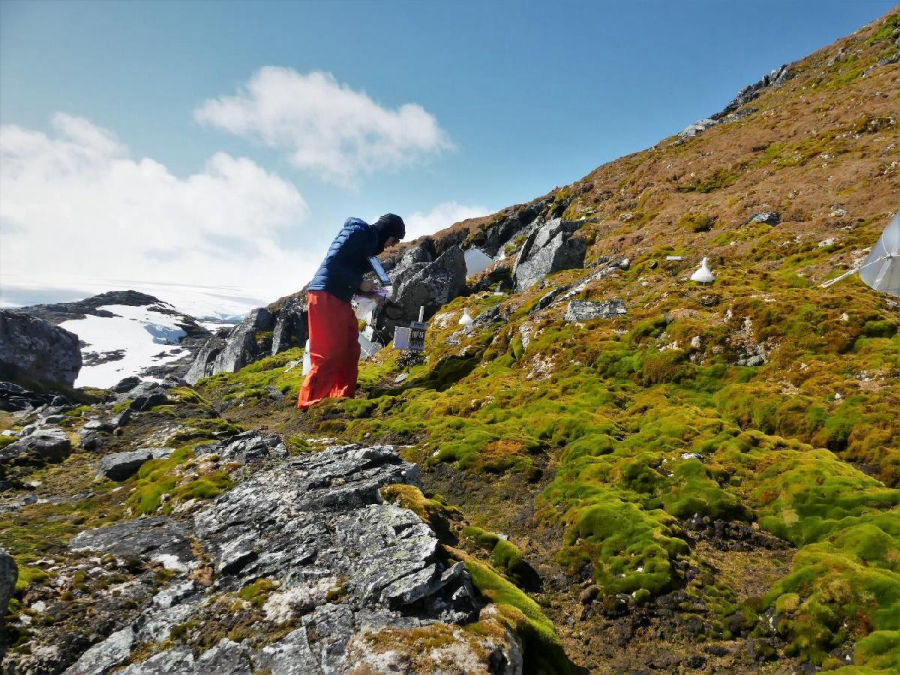
Supporting Stations: Palmer Station DescriptionThis 5-year Antarctic Peninsula project is evaluating the magnitude feedback response of soil microbes and plant physiology to environmental parameters. The science team will use experimental field deployed chambers to evaluate the effects of warming on microbial mediated carbon losses from soil on a deglaciated sere gradient at sites in the western Antarctic Peninsula. The team will evaluate the differential warming responses of individual taxa of bacteria, fungi, and archaea and their potential roles in carbon cycling. The project will further assess the role of warming on photosynthetic uptake of carbon by the vegetation. Results will advance research in plant and soil microbial ecology and ecosystem modeling. Field Season OverviewEach field season, the team sets up 40 plots in the glacier forefield behind Palmer Station and on Litchfield Island, which include 20 plots containing open-top chambers (OTC) that elevate temperatures and 20 control plots without chambers. These are positioned in four different sites along a productivity gradient (five plots per treatment at each productivity level). OTCs are deployed as soon as possible after snowmelt (early December) and removed at the end of the growing season (late March). The environmental probes and steel collars have been in place in the field throughout the project to collect year-round continuous data on soil temperature and moisture. The 2026-27 field season is the final one for this project. Field measurements: During each field season the science team takes weekly carbon flux weather-permitting and photographs for vegetative cover analyses in all 40 plots. In those plots, the research team will examine longer-term warming effects with 2- and 4-week stable isotope field incubation using microcosms containing intact soil cores. Lab measurements: The science team will collect and incubate representative plant and soil specimens in lighted growth chambers to measure their photosynthetic rates in response to warming. They will include a “wind x warming” experiment to examine whether reduced wind speeds also enhance vegetative growth at the earliest successional site that has only recently shown moss growth. This earliest successional site has high organic matter content, and remnants of black, ancient moss are present, presumably having been a peat-bank during glacier advance thousands of years ago. Deploying Team Members
|
2026-2027 Science Planning Summary



For USAP Participants |
For The Public |
For Researchers and EducatorsContact UsU.S. National Science FoundationOffice of Polar Programs Geosciences Directorate Randolph Building 401 Dulany Street Alexandria, VA 22314 Sign up for the NSF Office of Polar Programs newsletter and events. Feedback Form |