2026-2027 USAP Field Season
Project Detail Project TitleAntarctic SuperDARN Research, Operations, and System Enhancements Summary
Event Number:
Program Director:
ASC POC/Implementer: Principal Investigator(s)
Dr. William Bristow
Location
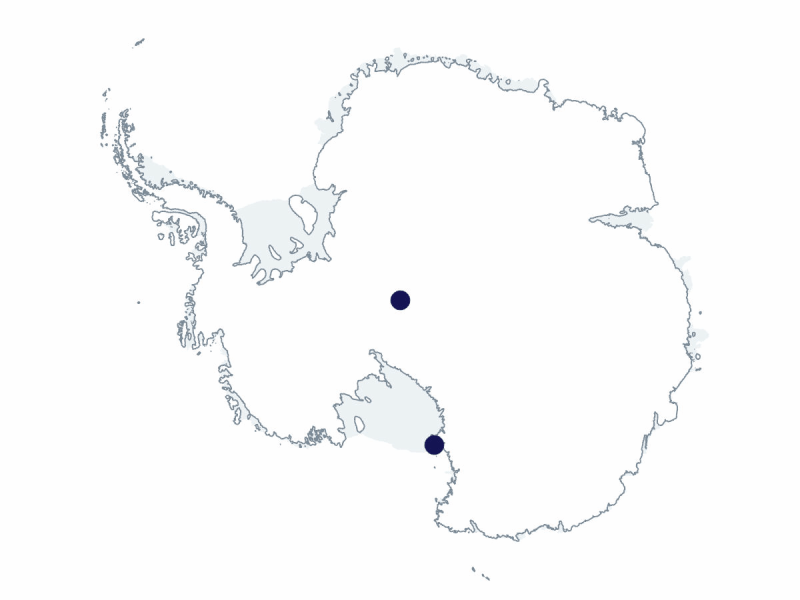
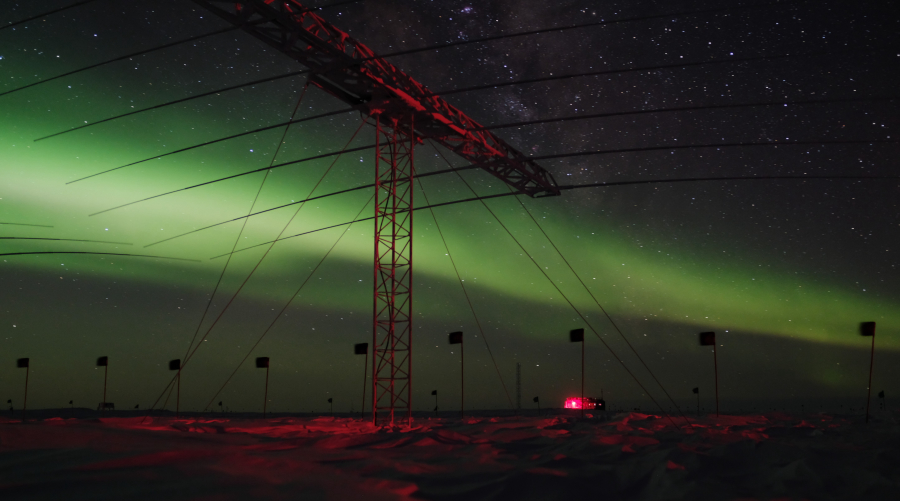
Supporting Stations: McMurdo Station, South Pole Station DescriptionThe Super Dual Auroral Radar Network (SuperDARN) is an international collaborative experiment for observations of plasma motions in Earth’s upper atmosphere. By observing ionospheric plasma motions, a multitude of geophysical processes can be studied. These processes range from E-region plasma instabilities, to the relationships between auroral luminosity and electric fields, to the global-scale convective response to changes in the solar wind and interplanetary magnetic field (IMF). Each of these areas of study contributes to the overall goals of space physics: developing an understanding of the coupling of solar wind energy into Earth’s upper atmosphere and its effects on human-made systems. This project supports the operation of, and research using data from, the SuperDARN radars at McMurdo Station and South Pole Station. The project supports a major enhancement of the South Pole radar to enable polarimetric observations. No other SuperDARN radar has the ability to characterize the polarization of its received signals. Providing this capability will open up entirely new research areas for SuperDARN. Data from these radars will be used in conjunction with data from the rest of the SuperDARN network and the wealth of other space physics instruments in Antarctica to study a variety of topics, including (1) convection responses to solar wind and IMF changes; (2) the relationship of central polar cap convection to that of the cusp and midnight regions and to the state of the coupled magnetosphere-ionosphere system; (3) the relationship between the wave structure observed in solar wind and responses in the polar cap; (4) the motions of density structures such as plasma patches through the polar cap; (5) ion-neutral coupling; and (6) thermospheric winds. Field Season OverviewTwo participants will deploy to South Pole Station and McMurdo Station for equipment maintenance and upgrades. At McMurdo, the team will replace the existing transmitters with a refurbished set and upgrade the radar operating software. At both stations, minor modifications will be completed on the transmitters, and other minor annual maintenance will be undertaken within the limits of deployment time. Any necessary repairs from winter damage will be repaired through the assistance of Antarctic Support Contract (ASC) staff. The systems will otherwise continue to operate autonomously, year-round, via remote monitoring and control, aided by on-site support provided by ASC staff and other station infrastructure (e.g., information technology network, station services) as needed. Research associate support will be provided throughout the year for routine monitoring and operation, responding to minor maintenance or diagnostic requests, and direct grantee assistance while the team is on site. Deploying Team Members
|
2026-2027 Science Planning Summary



For USAP Participants |
For The Public |
For Researchers and EducatorsContact UsU.S. National Science FoundationOffice of Polar Programs Geosciences Directorate Randolph Building 401 Dulany Street Alexandria, VA 22314 Sign up for the NSF Office of Polar Programs newsletter and events. Feedback Form |