2026-2027 USAP Field Season
Project Detail Project TitleCollaborative Research: Antarctic Automatic Weather Station Program Summary
Event Number:
Program Director:
ASC POC/Implementer: Principal Investigator(s)
Dr. Matthew Lazzara
Location
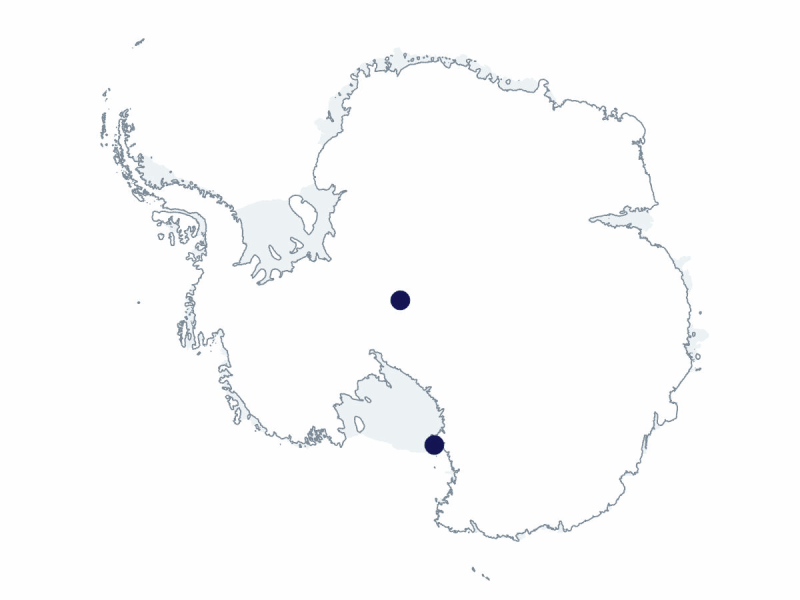
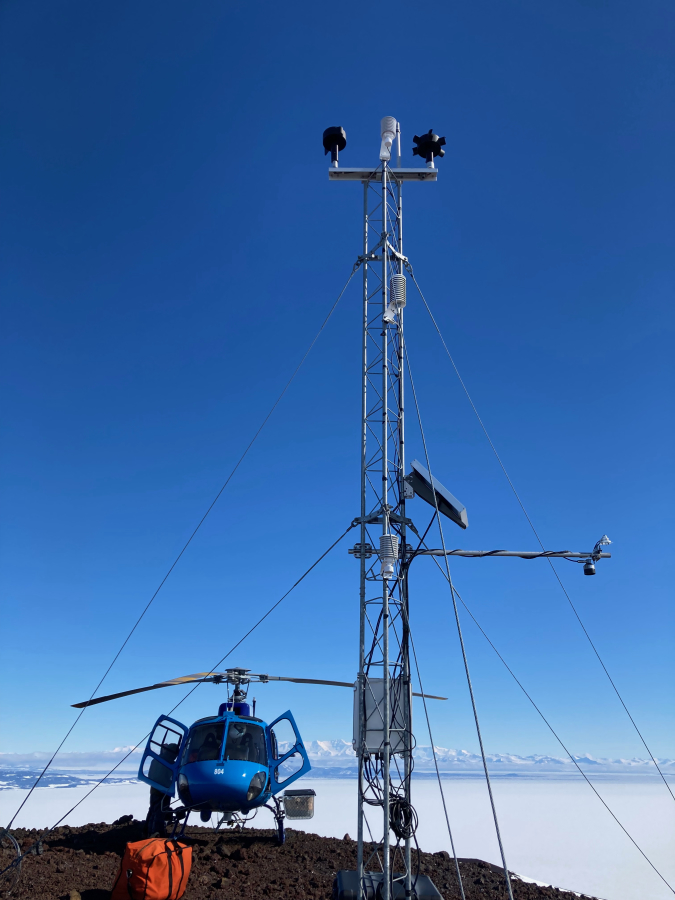
Supporting Stations: McMurdo Station, South Pole Station DescriptionThe Antarctic automated weather station (AWS) network has been making meteorological observations since the early 1980s. This continentwide network is positioned to observe significant meteorological events in real time and increase understanding of the climate of the Antarctic surface. Project activities will focus on maintaining and operating the AWS network, student engagement, and outreach activities. Goals include upgrading real-time AWS processing, monitoring evolving communication methods, and facilitating wide distribution of AWS data. Prior National Science Foundation investments in the Madison Automated Weather Station will be leveraged with the development of a more robust station that can be reliably utilized year-round in Antarctica. The observations will be quality-controlled and placed into a database where the public can search and select observations. A test system of different radiation shields (with and without aspiration) will be deployed for 1 year at South Pole Station to resolve conflicting radiation-shield bias corrections of historical data and to inform optimal setup for temperature observations going forward. Field Season OverviewTwo participants will deploy in early November 2026 and focus on servicing AWS stations around McMurdo Station via helicopter, Twin Otter aircraft, and overland vehicles. In early December, they will spend several days at South Pole Station to install a weather observation system near the Atmospheric Research Laboratory and service two more AWS stations by Twin Otter. The team will return to McMurdo in mid-December, one participant will be replaced with a new team member, and the new team will focus on West Antarctica and put in to Siple Dome in late December to service three to four AWS stations by Twin Otter. The team will then move to Byrd surface camp to service another two to three stations by Twin Otter before returning to McMurdo in mid-January 2027. Servicing involves digging out, raising, and (if needed) repairing AWS stations and occasionally replacing power systems. The team will redeploy in late January. A research associate will assist with monitoring and troubleshooting AWS network equipment at McMurdo year-round. Deploying Team Members
|
2026-2027 Science Planning Summary


For USAP Participants |
For The Public |
For Researchers and EducatorsContact UsU.S. National Science FoundationOffice of Polar Programs Geosciences Directorate Randolph Building 401 Dulany Street Alexandria, VA 22314 Sign up for the NSF Office of Polar Programs newsletter and events. Feedback Form |