2026-2027 USAP Field Season
Project Detail Project TitleCareer: Ecosystem Impacts of Microbial Succession and Production at Antarctic Methane Seeps Summary
Event Number:
Program Director:
ASC POC/Implementer: Principal Investigator(s)
Dr. Andrew Reichmann Thurber
Location
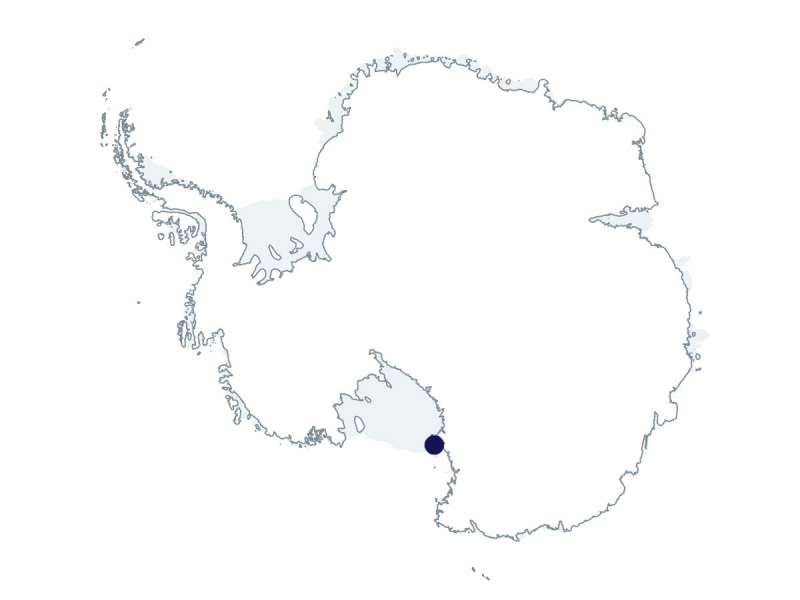
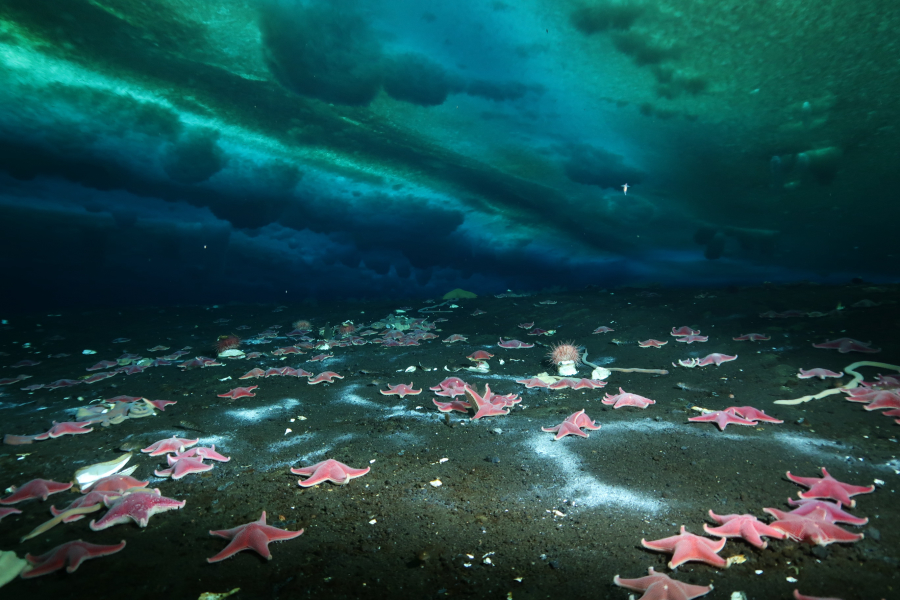
Supporting Stations: McMurdo Station DescriptionThis project involves the genomic and transcriptomic study of microbial communities developed and still developing after seepage of methane through the seafloor into the ocean — the cold seeps. The first methane seepage in the high Antarctic was discovered in McMurdo Sound in 2012 and 5 years later still had an underdeveloped microbial community that was consuming methane. This project will elucidate the microbial community composition in relation to the presence of methane and their function in oxidizing methane in Antarctic coastal waters. The project aims to answer three scientific questions on microbes associated with methane seeps: (1) What is their relation to species present and their evolution over time, (2) what metabolic processes do they support, and (3) what role do they play in providing food for benthic food webs. Sampling must occur in the late winter / early spring, before high light levels support growth of diatom mats over the benthos. When at McMurdo Station, the science team, with United States Antarctic Program (USAP) dive support, will sample to characterize the community in sediment cores and collect other animals to assess the carbon flow through the food web supported by methane. Geochemical analysis of methane released in the sediment will be measured on samples collected in situ and analyzed on an instrument provided by the team. Additional experiments will be run in the aquarium. A Polar STEAM (science, technology, engineering, arts, and math) artist will be included as part of the team. Field Season OverviewFour participants will deploy for approximately 3 months, from mid-August to mid-November 2026, to collect sediment cores and animals with the aid of USAP dive support. A significant component of the research will focus on experimentation using either the seawater system or incubators within the Albert P. Crary Science and Engineering Center. A Polar STEAM artist will be included as part of the team. In the field, the team will focus on sampling areas of known methane seepage around eastern McMurdo Sound, with the goal of sampling as far north as ice conditions allow, as early as possible during Winter Flight. If feasible, these areas will include cinder cones shortly after landing or access to the jetty and more southerly sites while it is still mostly dark. Most of the work involves diving out of fish huts, as well as dive “tomatoes” or “apples.” The team will again collaborate with Dr. Sarah Seabrook's team through Antarctica New Zealand (AntNZ) to co-study the methane seep sites at Cape Evans, staying at the AntNZ camp up to 3 nights to minimize fuel and drive time between McMurdo Station and Cape Evans. Deploying Team Members
|
2026-2027 Science Planning Summary


For USAP Participants |
For The Public |
For Researchers and EducatorsContact UsU.S. National Science FoundationOffice of Polar Programs Geosciences Directorate Randolph Building 401 Dulany Street Alexandria, VA 22314 Sign up for the NSF Office of Polar Programs newsletter and events. Feedback Form |