2026-2027 USAP Field Season
Project Detail Project TitleMCM-LTER: MCM6: The Roles of Legacy and Ecological Connectivity in a Polar Desert Ecosystem Summary
Event Number:
Program Director:
ASC POC/Implementer: Principal Investigator(s)
Dr. Cristina Danielle Takacs-Vesbach
Project Web Site: Location
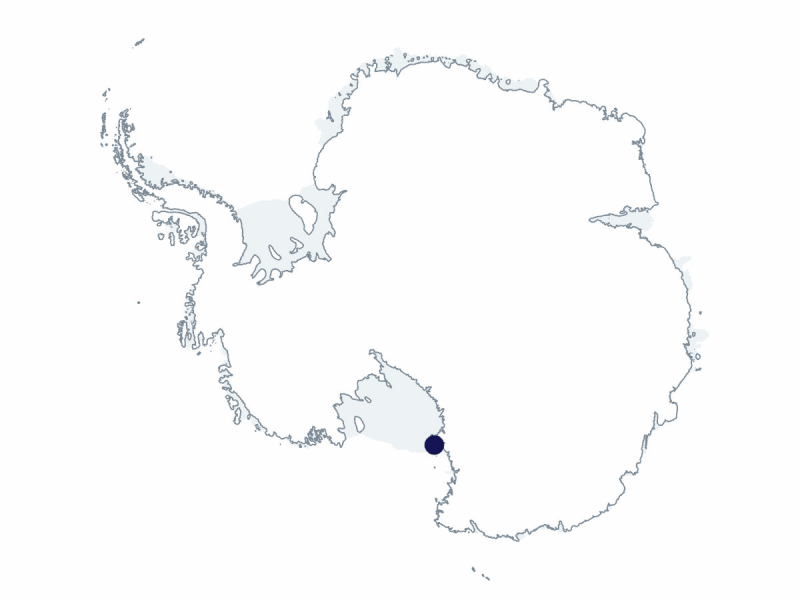
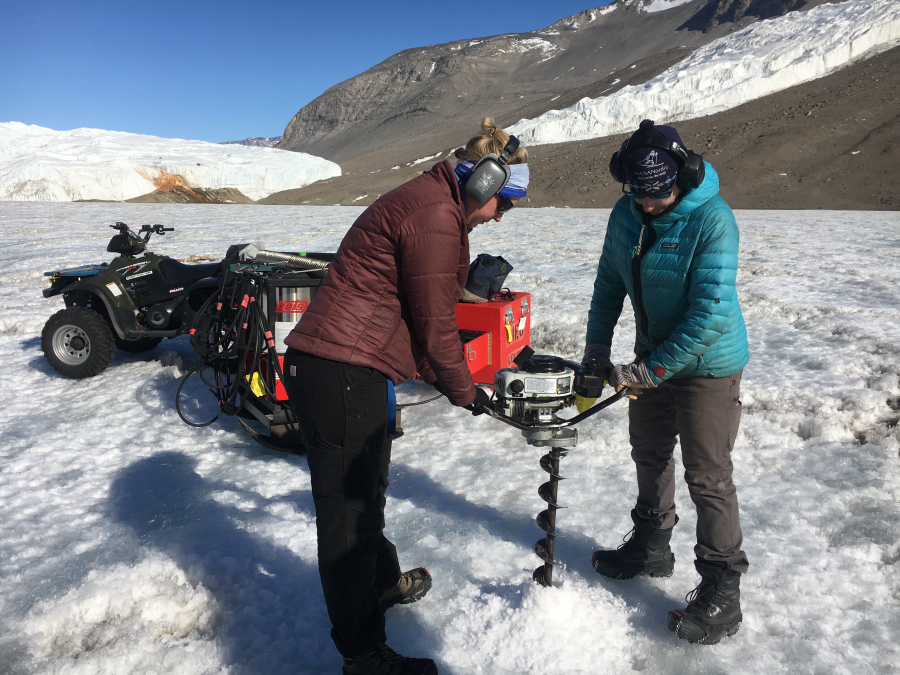
Supporting Stations: McMurdo Station DescriptionIn this iteration of the McMurdo Long-Term Ecological Research (MCM-LTER) project (MCM6), the science team will test ecological connectivity and stability theory in a system subject to strong physical drivers (e.g., geological legacies, extreme seasonality) and driven by microbial organisms. The team hypothesizes that the structure and functioning of the McMurdo Dry Valleys ecosystem depends on legacies and the contemporary frequency, duration, and magnitude of ecological connectivity. This hypothesis will be tested with new and continuing monitoring, experiments, and analyses of long-term datasets to examine (1) the stability of these ecosystems as reflected by sentinel taxa; (2) the relationship between ecological legacies and ecosystem resilience; (3) the importance of material carryover during periods of low connectivity to maintaining biological activity and community stability; and (4) how changes in disturbance dynamics disrupt ecological cycles through the polar night. One artist from the Polar STEAM (science, technology, engineering, arts, and math) project will join the team in the field. Field Season OverviewFive participants will deploy on the Long-Term Ecological Research (LTER) limno team between mid-October 2026 and mid-February 2027. The team will rotate among Lake Fryxell, Lake Hoare, and Lake Bonney camps, conducting two to three rounds of "limno runs" in which they complete biological and chemical sampling throughout the water column. The team will also retrieve and redeploy a large sediment trap. Antarctic Support Contract carpentry staff will set up Polarhavens on the ice of Lake Fryxell, Lake Bonney, and Lake Hoare for the team to work from. The team will melt holes in the ice to access the water column. The team will also make day trips to other lakes in the Dry Valleys (e.g., lakes Miers, Vanda, Joyce, Trough, and Vida) to collect samples. Between each limno run, the team will return to the Albert P. Crary Science and Engineering Center to process samples. One Polar STEAM artist will deploy with the C-505-M project team and work with it and the C-508-M project team in the field. Deploying Team Members
|
2026-2027 Science Planning Summary



For USAP Participants |
For The Public |
For Researchers and EducatorsContact UsU.S. National Science FoundationOffice of Polar Programs Geosciences Directorate Randolph Building 401 Dulany Street Alexandria, VA 22314 Sign up for the NSF Office of Polar Programs newsletter and events. Feedback Form |