2026-2027 USAP Field Season
Project Detail Project TitleCollaborative Research: Snow Transport in Katabatic Winds and Implications for the Antarctic Surface Mass Balance: Observations, Theory, and Numerical Modeling Summary
Event Number:
Program Director:
ASC POC/Implementer: Principal Investigator(s)
Dr. Scott Thomas Salesky
Location
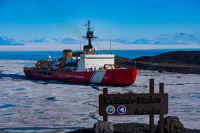
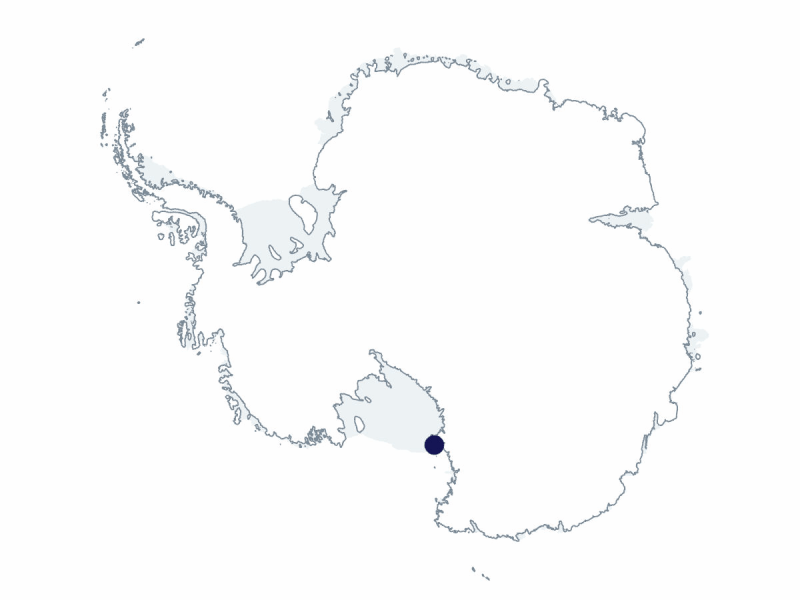
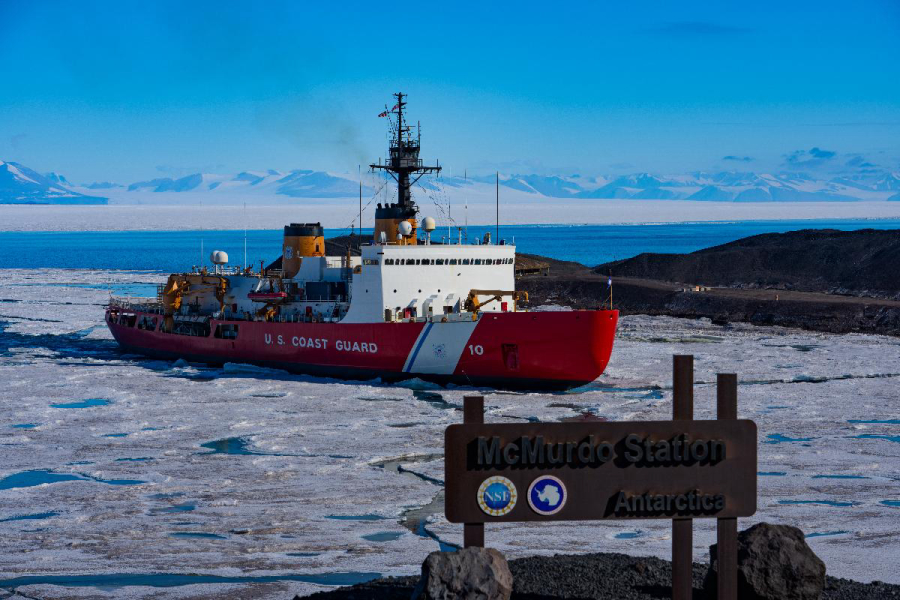
Supporting Stations: McMurdo Station DescriptionThis project aims to advance understanding of snow transport and redistribution by near-surface katabatic winds, which have critical implications for the surface mass balance of the Antarctic ice sheet. Its evolution through snow deposition, erosion, and transport in katabatic winds (which are persistent across much of the Antarctic) remains poorly understood due to the lack of an overarching theoretical framework, scarcity of in situ observational datasets, and absence of accurate numerical modeling tools. To achieve the main research objectives, the science team will conduct a field campaign to measure (1) the mean flow and turbulent structure of katabatic winds and snow transport using meteorological instruments on a tower; and (2) longer-term accumulation variability using radars. Observations will be used to develop a unique feature: resolving a numerical algorithm capable of representing the fine-scale physics of snow transport, long-term accumulation variability, redistribution, and sublimation in katabatic winds. The new model will produce insights at an unprecedented level of detail of katabatic transport processes, enabling an accurate quantification of snow transport in the Antarctic surface mass balance. Field Season OverviewDuring the 2026-27 field season, a team of three will deploy to McMurdo Station to install instruments on a 10-meter micrometeorological tower, potentially installing one autonomous phase-sensitive radar collocated with the tower site, and will provide research assistant training and instructions. The tower instrumentation will operate autonomously for 12 months, monitoring winds, temperature, radiation, turbulence, and blowing snow. The tower/research site is on the Ross Ice Shelf near the snow road. Antarctic Support Contract rigger staff will erect the tower and provide all climbing support needed. In 2027-28, team members will return to decommission and retrograde their equipment. Deploying Team Members
|
2026-2027 Science Planning Summary



For USAP Participants |
For The Public |
For Researchers and EducatorsContact UsU.S. National Science FoundationOffice of Polar Programs Geosciences Directorate Randolph Building 401 Dulany Street Alexandria, VA 22314 Sign up for the NSF Office of Polar Programs newsletter and events. Feedback Form |