2026-2027 USAP Field Season
Project Detail Project TitleCollaborative Research: Antarctic Low Cloud Interaction With Natural Aerosol (ALCINA) Summary
Event Number:
Program Director:
ASC POC/Implementer: Principal Investigator(s)
Dr. Dan Lubin
Project Web Site: Location
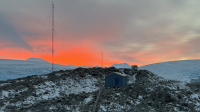
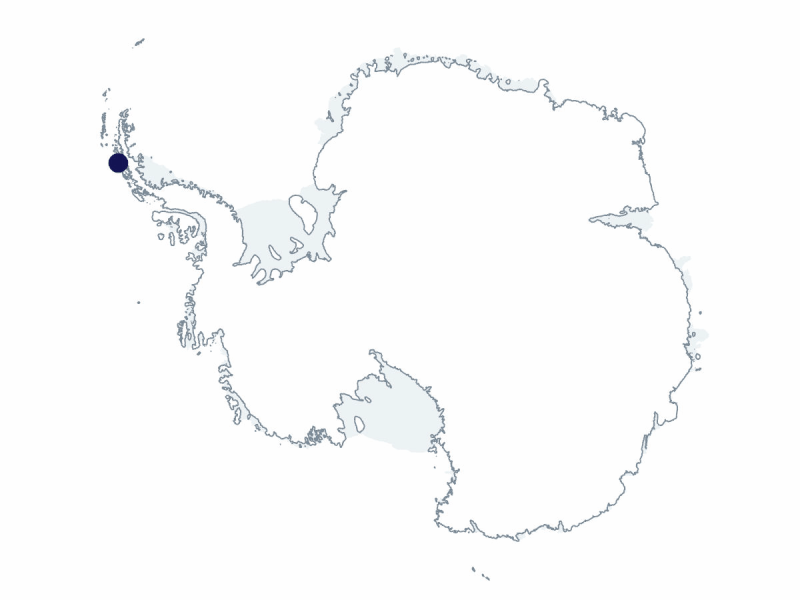
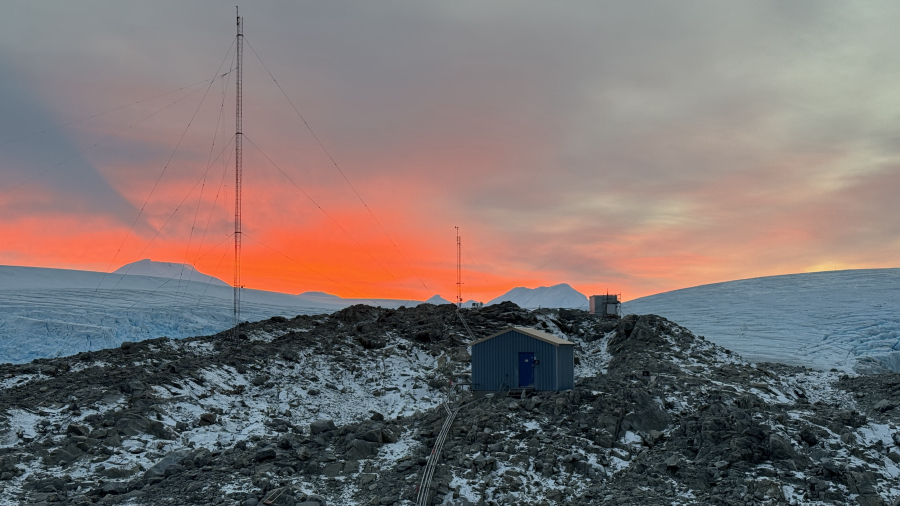
Supporting Stations: Palmer Station DescriptionThis project focuses on advancing Earth system simulations over Antarctica and the Southern Ocean by improving physical representation of low-level clouds. These clouds significantly impact ice-surface melt events and inaccuracies in solar energy transmission, degrading weather models. As errors in cloud simulations have been linked to insufficient information about aerosols (ubiquitous microscopic particles that seed cloud droplet and cloud ice crystal formation), the science team will continuously collect data on ocean and continent aerosols, their chemical and microphysical properties, and cloud optical properties at Palmer Station for 18 months. These austral summer and winter observations will yield robust aerosol-cloud interaction statistics for Earth system model evaluation and improvement. Aerosol property measurements include size distributions; number concentrations of cloud condensation nuclei and ice nucleating particles (INPs); chemical compositions of minerals, sulfates, sea salt, and organics; and microbial community structure from DNA sequencing. The measurements will also differentiate algal bloom from continental dust influences on INPs, for which there is scarce data over Antarctica. Field Season OverviewThe team will deploy to Palmer Station in November 2026, when the transportable laboratory housing for the aerosol sampling equipment will already have been set up behind Terra Lab with heating, ventilation, and air conditioning. The team will install one set of five broadband radiometers and an automated weather station on a platform behind the aerosol structure. A spectroradiometer and an all-sky camera system will be installed on a truss tower adjoining the housing. Another suite of radiometers and an eddy covariance turbulent flux system will be set up nearby, as clear of other structures as possible. A multifilter radiometer and a cloud backscatter lidar will be installed at the Terra Lab. All of this equipment will operate continuously for 18 months. Throughout the austral summer, the team will fly uncrewed aerial systems to obtain vertical profiles of atmospheric thermodynamics. Deploying Team Members
|
2026-2027 Science Planning Summary


For USAP Participants |
For The Public |
For Researchers and EducatorsContact UsU.S. National Science FoundationOffice of Polar Programs Geosciences Directorate Randolph Building 401 Dulany Street Alexandria, VA 22314 Sign up for the NSF Office of Polar Programs newsletter and events. Feedback Form |