2026-2027 USAP Field Season
Project Detail Project TitleSmall Multi-GNSS Data Collection Array for Ionosphere and Space Weather Monitoring Summary
Event Number:
Program Director:
ASC POC/Implementer: Principal Investigator(s)
Dr. Jade T Morton
Location
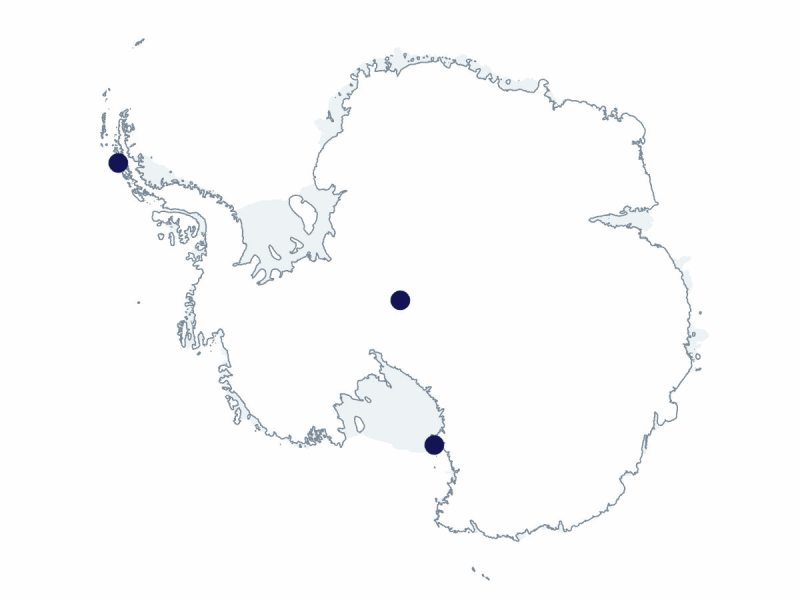
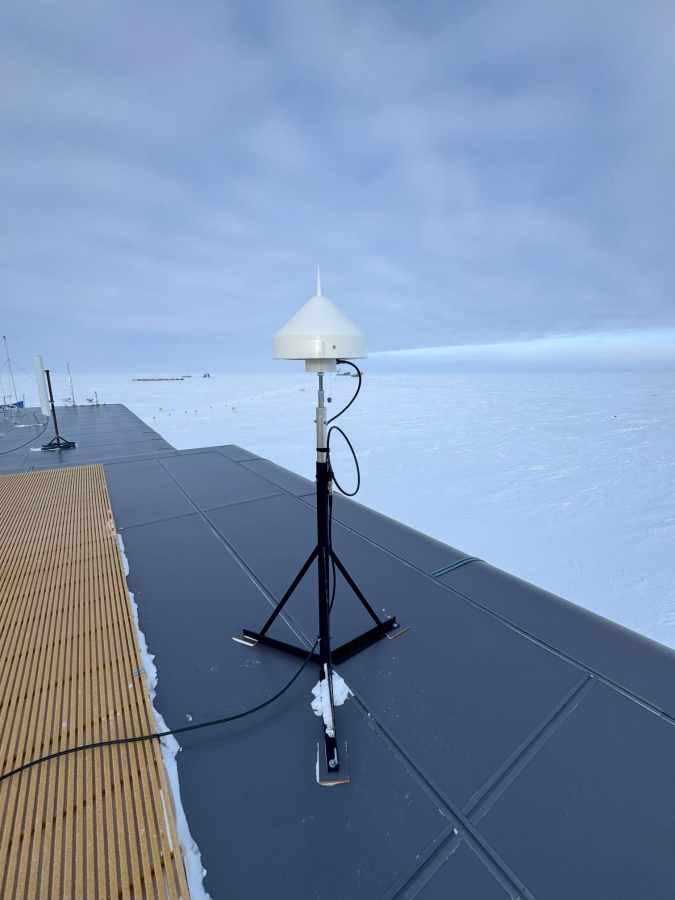
Supporting Stations: McMurdo Station, Palmer Station, South Pole Station DescriptionThe polar ionosphere is home to complex processes that reflect dynamic coupling between the solar wind, magnetosphere, and upper atmosphere. As the Sun approaches its solar maximum, the polar ionosphere increasingly experiences intense space weather events. Global navigation satellite system (GNSS) signals propagating through the polar ionosphere offer a unique opportunity to observe and study multiscale ionosphere irregularities, which are more intense, frequent, and complex in the southern than northern hemisphere. Current models do not adequately capture certain observed phenomena and irregularity formation and propagation mechanisms. Better spatial coverage, continuity, and resolution of ionospheric structures are needed to observe ionospheric plasma irregularities and their dynamics over Antarctica and to compare northern and southern hemisphere ionospheric responses to space weather events. This project aims to integrate data from new and existing GNSS stations with satellite measurements and data from multi-instrument sites that the science team and collaborators operate in Antarctica and the Arctic, to perform long-term monitoring of patterns of ionospheric irregularities over the southern polar regions and their dependence on solar-geomagnetic activities. Dedicated case studies will also be conducted to investigate the physics behind ionospheric irregularity formation and evolution in relation to geomagnetic activity and associated ionospheric dynamics at high latitudes. Field Season OverviewThe team will not deploy to Antarctica during the 2026-27 season. A GNSS experiment was installed in 2024-25 at McMurdo Station (Arrival Heights Lab) and South Pole Station (B2 Lab) with the help of principal investigators Dr. Hyomin Kim (2332427) and Dr. Allan Weatherwax (2332429). At Palmer Station (Terra Lab), a GNSS experiment was installed during 2025-26. Each installed GNSS experiment uses 28” x 28” x 17” of lab or tabletop space, and the GNSS equipment requires no data transfers. Removable hard drives will be shipped back to the home institution twice per year or as logistics can accommodate. Research associate support will be provided weekly for general maintenance and troubleshooting and annually for data-media shipping and receiving. |
2026-2027 Science Planning Summary



For USAP Participants |
For The Public |
For Researchers and EducatorsContact UsU.S. National Science FoundationOffice of Polar Programs Geosciences Directorate Randolph Building 401 Dulany Street Alexandria, VA 22314 Sign up for the NSF Office of Polar Programs newsletter and events. Feedback Form |