2026-2027 USAP Field Season
Project Detail Project TitleCollaborative Research: A New Approach to Firn Evolution Using the Taylor Dome Natural Laboratory Summary
Event Number:
Program Director:
ASC POC/Implementer: Principal Investigator(s)
Kaitlin M Keegan
Location
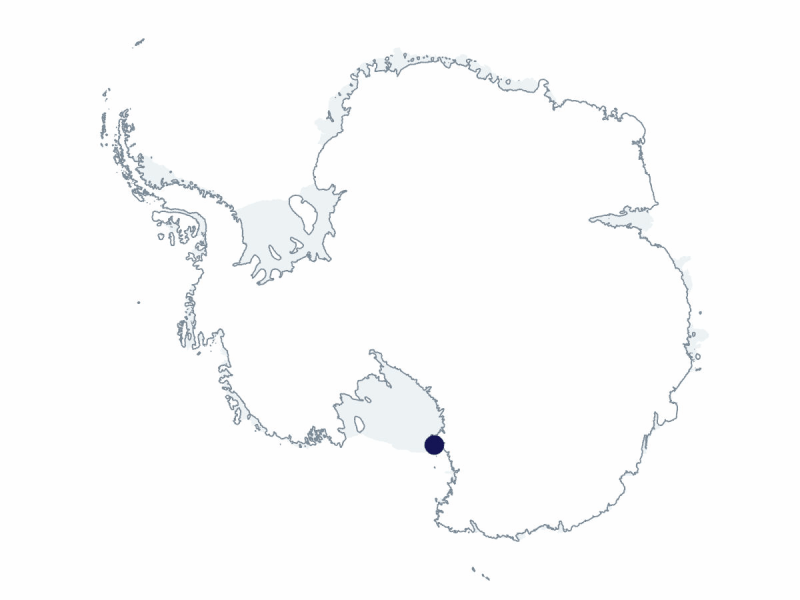
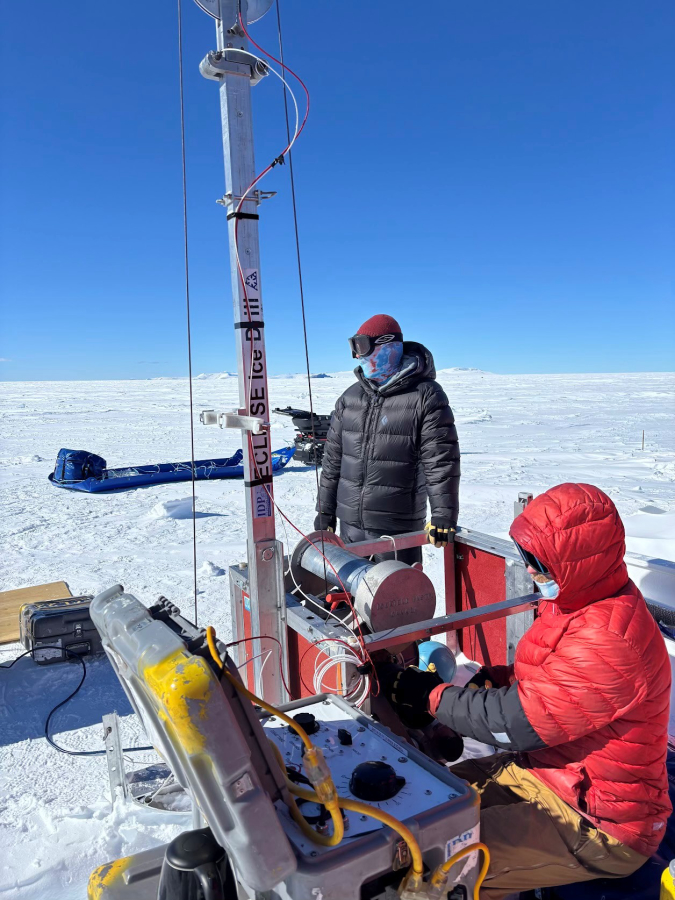
Supporting Stations: McMurdo Station DescriptionThis project will introduce a new combination of firn datasets designed to facilitate development of next-generation, physics-based firn models. Advances in ice core science and satellite altimetry demand firn models that can reliably simulate firn evolution in a range of climatic conditions, in a environments, and on long and short timescales. Current firn compaction models are largely based on a steady state assumption and tuned to particular geographical locations. Advancing beyond these models requires (1) measuring current firn compaction rates; (2) measuring grain-scale microstructures that play a crucial role in firn compaction; and (3) quantifying processes driving evolution of those microstructures. To decouple the firn’s sensitivities to accumulation and temperature, the science team will measure in situ strain rates by two independent methods and observe trends in microstructure in cores from sites spanning the accumulation gradient at Taylor Dome in Antarctica while maintaining the same average temperature. The team will assess the ability of phase-sensitive radar to remotely measure firn compaction rates, potentially simplifying future in situ measurements. This work will create a road map for collecting future microstructural data spanning key areas of temperature accumulation space and simplify future collaborations through the availability of the open-source Community Firn Model. Field Season OverviewThe 2026-26 field season is the second of three for this project. Three participants will deploy from mid-December to late January. They and an Antarctic Support Contract field safety coordinator will put in to Taylor Dome and set up a small tent camp in late December. The participants will spend 2.5 weeks using snowmachines to traverse routes established in the 2025-26 season to sites with installed instrumentation, where they will download data and replace some of the instruments. They will also collect repeat phase-sensitive radar measurements at 10 sites and collect radar data along the transects. Instruments will be left in place for next season. Upon completion of field work, the team return to McMurdo then redeploy in late January. Deploying Team Members
|
2026-2027 Science Planning Summary



For USAP Participants |
For The Public |
For Researchers and EducatorsContact UsU.S. National Science FoundationOffice of Polar Programs Geosciences Directorate Randolph Building 401 Dulany Street Alexandria, VA 22314 Sign up for the NSF Office of Polar Programs newsletter and events. Feedback Form |