2026-2027 USAP Field Season
Project Detail Project TitleExoplanet Climate Infrared Telescope (EXCITE) Summary
Event Number:
Program Director:
ASC POC/Implementer: Principal Investigator(s)
Dr. Peter Campbell Nagler
Project Web Site: Location
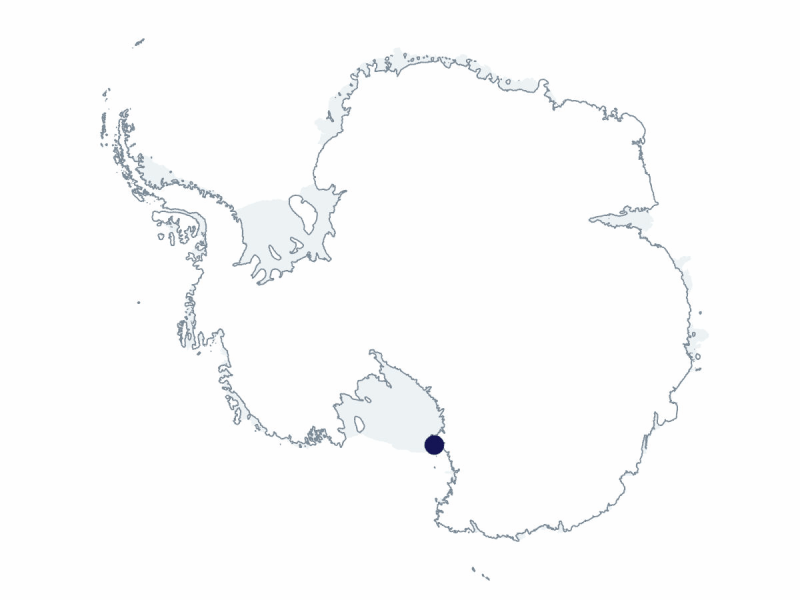
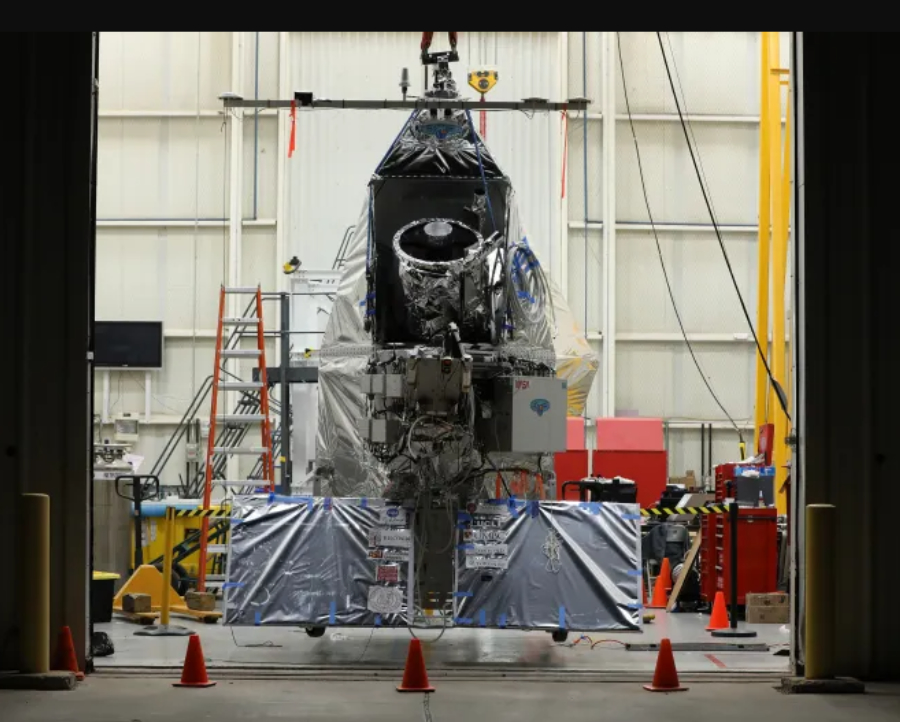
Supporting Stations: McMurdo Station DescriptionThe Exoplanet Climate Infrared Telescope (EXCITE) is a National Aeronautics and Space Administration (NASA) long duration balloon payload designed to characterize the atmospheres of transiting exoplanets (i.e., worlds beyond this solar system). EXCITE flies a telescope that is 0.5 meters in diameter and coupled to a cryogenic infrared spectrograph with sensitivity from 0.8 to 3.5 microns, which covers the spectral signatures of many carbon- and hydrogen-containing molecules (e.g., water, carbon dioxide). Besides measuring the compositions of exoplanet atmospheres, EXCITE will determine the temperatures of the planets' atmospheres and probe how they recirculate energy. This is accomplished via phase resolved spectroscopy, a technique involving continuous spectroscopic observations of a planet's entire orbit around its host star. Many advanced technologies also fly for the first time on EXCITE, including the detector readout electronics that will fly on NASA’s Roman Space Telescope. Ultimately, the data collected by EXCITE will significantly advance understanding of exoplanet atmospheres and refine observational and analysis techniques for future space missions. EXCITE will carry the Sparrow piggyback payload in 2026-27, which will gather wind data during flight. Field Season OverviewIn 2026-27, a science team of eight to nine people will assemble and test EXCITE at the Long Duration Balloon Facility at McMurdo Station. Team members will deploy on a staggered schedule, with the first arriving shortly before camp opening on 31 October 2026 and the last arriving by mid-November. EXCITE assembly and testing is expected to take 2 to 3 weeks, before flight readiness is declared for a planned launch on 1 December. For scientific purposes, a flight of at least 7 days at a float altitude of more than 124,700 feet is required. The longest flight possible will be sought — the science payload has no expendables and can fly indefinitely. Post-launch, most of the science team will leave in staggered departures to ensure continuous capability coverage, with three members remaining to monitor the payload and support same-season recovery by aircraft, Arctic Trucks, or traverse. After termination and landing of the payload, the three team members will travel to it to recover the experiment's hard drives (required) and the science instrument (preferred). Deploying Team Members
|
2026-2027 Science Planning Summary



For USAP Participants |
For The Public |
For Researchers and EducatorsContact UsU.S. National Science FoundationOffice of Polar Programs Geosciences Directorate Randolph Building 401 Dulany Street Alexandria, VA 22314 Sign up for the NSF Office of Polar Programs newsletter and events. Feedback Form |