2026-2027 USAP Field Season
Project Detail Project TitleSouth Pole Telescope Operations and Data Products Summary
Event Number:
Program Director:
ASC POC/Implementer: Principal Investigator(s)
Dr. Thomas M Crawford
Project Web Site: Location
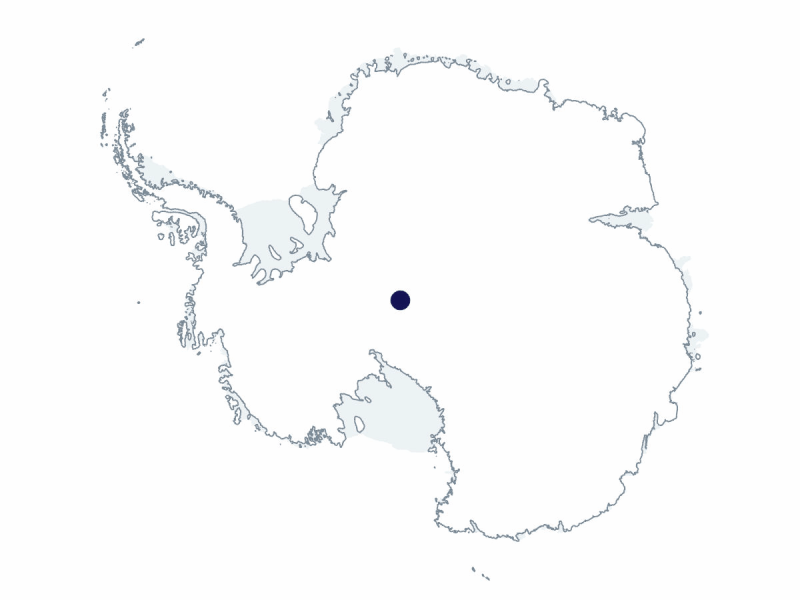
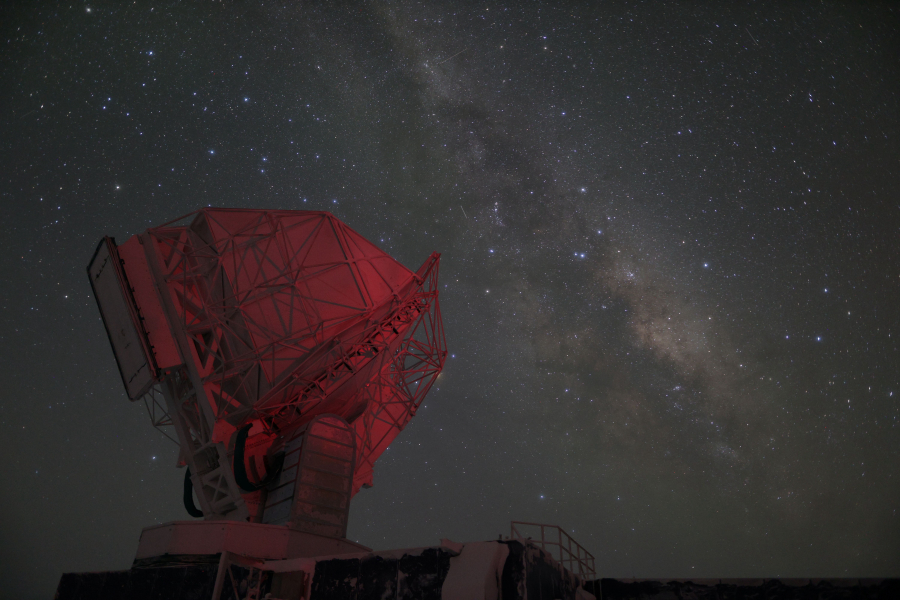
Supporting Stations: South Pole Station DescriptionThis project will continue maintenance and operations of the 10-meter South Pole Telescope (SPT), which is equipped with the current third-generation instrument, SPT-3G. Survey observations will be made with SPT-3G to obtain ultra-deep, three-band millimeter-wave measurements of the 1,500 square-degree SPT-3G Main field. This SPT-3G survey region had been chosen to overlap with the Background Imaging of Cosmic Extragalactic Polarization (BICEP; aka BICEP/Keck) survey, with the coordinated observations used for a joint analysis to search for gravitational waves from the early universe. In addition, SPT-3G data will place new constraints on the cosmic neutrino density, possibly making the first-ever detection of the sum of the neutrino masses, constrain the properties of dark energy, and discover new astronomical objects (e.g., clusters of galaxies, proto-clusters, dusty star forming galaxies, transient sources). The project will also support SPT's critical role in the Event Horizon Telescope (EHT), as well as the operation of the South Pole Telescope Summertime Line Intensity Mapper (SPT-SLIM). The EHT is a global array of telescopes to image the event horizon of nearby supermassive black holes. It made worldwide headlines with its first detections of the event horizon shadow from the black holes at the center of the Messier 87 (M87) and Milky Way (or Sagittarius A* [Sgr A*]) galaxies. Field Season OverviewThe primary maintenance activity for the 2026-27 season is repair of the SPT's azimuth cable wrap, which contains essential wiring and hoses to maintain telescope operation. The support structure for the cables in the azimuth wrap suffered significant damage during the 2024 austral winter season and was temporarily repaired during the 2024-25 and 2025-26 austral summer seasons. However, a more substantial rebuild is required. In addition, a new Advanced South Pole Integrated Receiver for EHT (ASPIRE) will be installed, enabling SPT's participation in the 2027 EHT observing run. SPT-SLIM will be reinstalled and conduct observations for a couple of weeks during 2026-27. Routine yearly SPT tasks include service and maintenance of the telescope components and computer systems, computer upgrades and servicing, cryogenic maintenance of the SPT and optics cryostats, and winter-over training. Deploying Team Members
|
2026-2027 Science Planning Summary



For USAP Participants |
For The Public |
For Researchers and EducatorsContact UsU.S. National Science FoundationOffice of Polar Programs Geosciences Directorate Randolph Building 401 Dulany Street Alexandria, VA 22314 Sign up for the NSF Office of Polar Programs newsletter and events. Feedback Form |