2026-2027 USAP Field Season
Project Detail Project TitleCollaborative Research: The Simpson Neutron Monitor Network Summary
Event Number:
Program Director:
ASC POC/Implementer: Principal Investigator(s)
Dr. Surujhdeo Seunarine
Project Web Site: Location
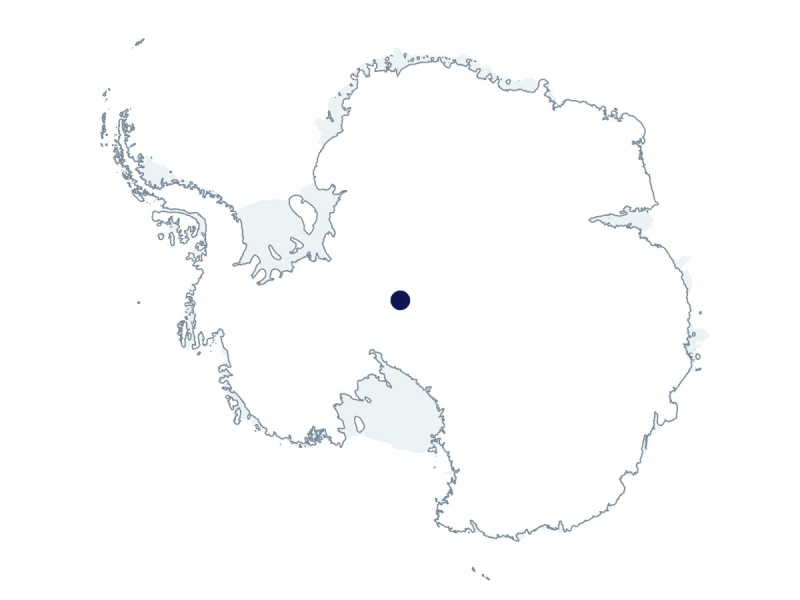
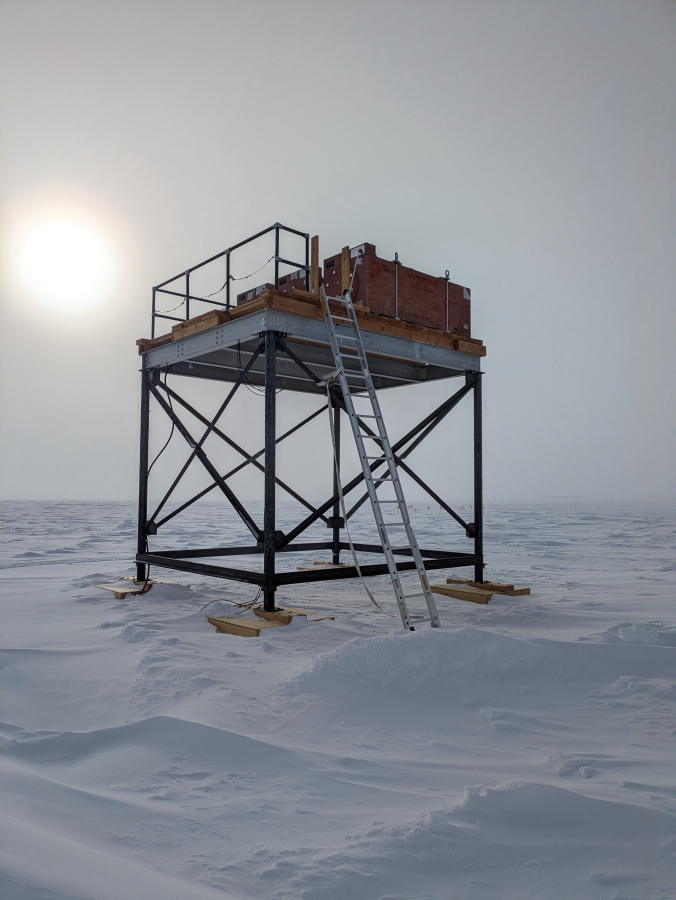
Supporting Stations: South Pole Station DescriptionA neutron monitor is a ground-based instrument that measures the intensity of cosmic rays striking Earth’s atmosphere. Cosmic rays carry information about large-scale heliospheric structure, the local space environment, and solar activity. Neutron monitors use the Earth’s magnetic field as a directional magnetic spectrometer and are unique tools for measuring the most energetic primary galactic cosmic radiation. Because the intensity with which cosmic rays strike Earth’s atmosphere varies not only temporally but also geographically, neutron monitors must be installed at many locations to attain a complete image of cosmic rays. The Simpson Neutron Monitor Network comprises 11 stations, with four institutions responsible for a subset of stations within the network. Neutron monitors cover the full sky 24/7, operating stably over many solar cycles, and are used to investigate how radiation from multiple sources and transport effects (e.g., solar emissions, inhomogeneities in the heliosphere, solar magnetic field reversals, transient coronal mass ejections, neutrons directly from solar flares) vary across timescales. Data accumulated by the Simpson Neutron Monitor Network are quickly fed to the international Neutron Monitor Database and are available in near real time. Field Season OverviewOne science team member will deploy to South Pole Station for 10 days in 2026-27 to focus on hardware installation, system validation, and calibration data acquisition activities. Tasks will include installing static wicks on the outdoor platform to mitigate static buildup on exposed components and surfaces, checking voltage stability at each counter’s electronic remote boards, directly collecting complete waveform data at the counters to verify signal integrity, and inspecting heater systems to confirm proper functionality. Where applicable, firmware upgrades will be performed on the data rack and remote boards to improve performance or add new features in the data stream. Deploying Team Members
|
2026-2027 Science Planning Summary



For USAP Participants |
For The Public |
For Researchers and EducatorsContact UsU.S. National Science FoundationOffice of Polar Programs Geosciences Directorate Randolph Building 401 Dulany Street Alexandria, VA 22314 Sign up for the NSF Office of Polar Programs newsletter and events. Feedback Form |