2026-2027 USAP Field Season
Project Detail Project TitleNASA Long Duration Balloon (LDB) Support Program Summary
Event Number:
Program Director:
ASC POC/Implementer: Principal Investigator(s)
Hugo Franco
Project Web Site: Location
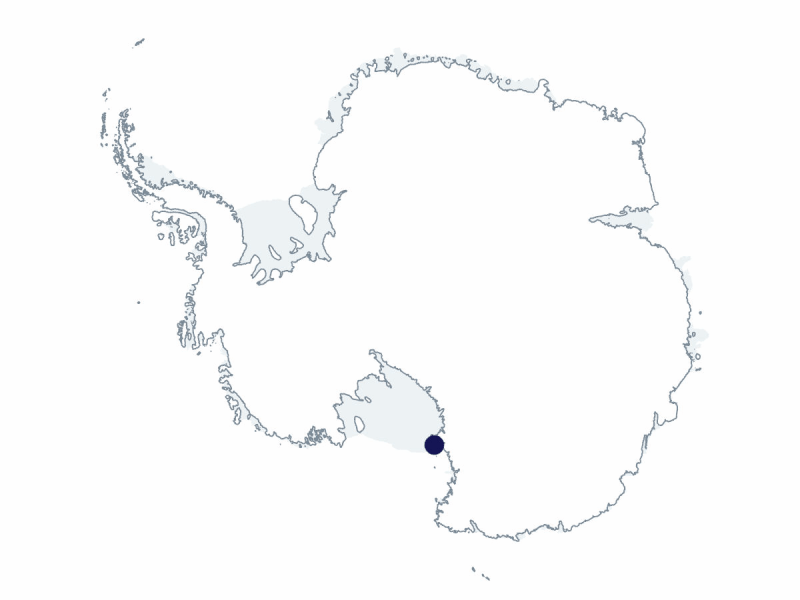
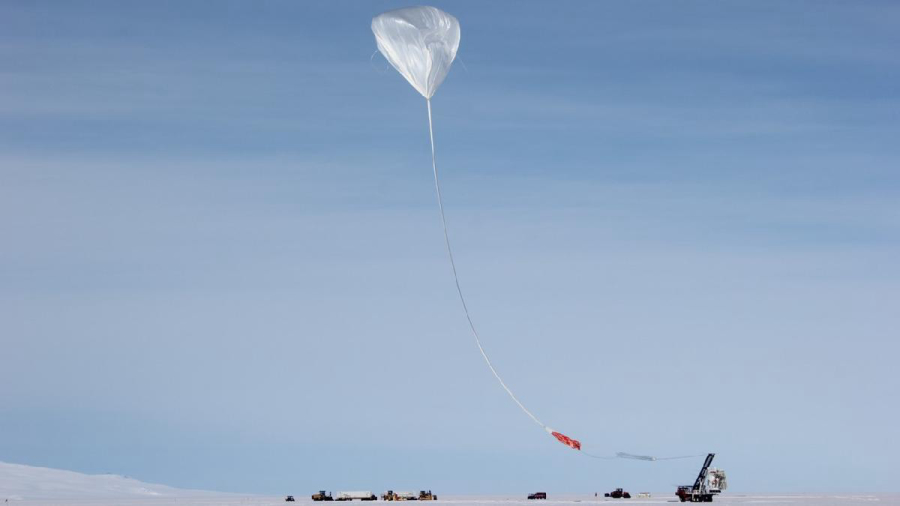
Supporting Stations: McMurdo Station DescriptionThe National Aeronautics and Space Administration (NASA) and Columbia Scientific Balloon Facility (CSBF) provide the balloon platform and project oversight for balloon launches from McMurdo Station in Antarctica. In the 2026-27 season, up to two full-size payloads are being planned for launch: the Antarctic Demonstrator for the Advanced Particle-astrophysics Telescope (ADAPT; project A-126); and the Exoplanet Climate Infrared Telescope (EXCITE; project A-130). These consist of science instruments, command/control systems, and solar/battery power units. Most data collected are stored on onboard hard drives, with a small amount of data transmitted to ground-based receiving stations via radio telemetry. After the flights are complete, recovery support is required to disassemble instruments and return data and equipment from the field to McMurdo Station. Field Season OverviewNASA and CSBF will launch the balloons in 2026-27 from the Long Duration Balloon Facility on the Ross Ice Shelf. On-site planning and preparation will begin mid-October 2026, during which CSBF will unpack cargo, dewinterize and test equipment, assemble flight systems, and support science teams with instrument construction. The science teams’ launch ready date is 1 December, which typically coincides with the establishment and stabilization of circumpolar stratospheric winds. The balloons will travel counterclockwise around the Antarctic continent between 70 and 80 degrees south latitude, at an approximate altitude of 115,000 to 160,000 feet. Flight duration for one revolution is typically 8 to 15 days though overall flight time can be longer. At the end of the flight, the balloons will be terminated over a suitable location and payloads will be recovered from the field. Payload recovery support is requested by aircraft, traverse, or Arctic Trucks. South Pole support is requested in the event of Arctic Truck payload recovery, including on-site support for up to three LDB personnel at the South Pole Amundsen-Scott Station. Deploying Team Members
|
2026-2027 Science Planning Summary



For USAP Participants |
For The Public |
For Researchers and EducatorsContact UsU.S. National Science FoundationOffice of Polar Programs Geosciences Directorate Randolph Building 401 Dulany Street Alexandria, VA 22314 Sign up for the NSF Office of Polar Programs newsletter and events. Feedback Form |